
One idea that really stuck with me this week is designing research with the end in mind. It sounds obvious, but when you actually apply it, it changes the way you approach everything.
Instead of just collecting data for the sake of it, it pushes you to first ask yourself: what decision am I trying to make? From there, you can work backwards and design your research in a much more intentional way.

If you read my previous post on why marketing research matters, this builds directly on that idea—really understanding your audience before taking action.
Applying this in the wellness industry
In the wellness space—whether it’s yoga classes, sound healing, or personal brands—it’s very easy to ask broad questions like “What do people want?” But most of the time, those answers don’t lead to anything concrete.
A more useful approach would be:
- If I want to improve class attendance, I need to understand what’s stopping people from coming (schedule, pricing, experience, etc.)
- If I want to refine my brand, I need to understand how people actually feel about it and how they perceive it
Qualitative vs Quantitative: choosing the right approach
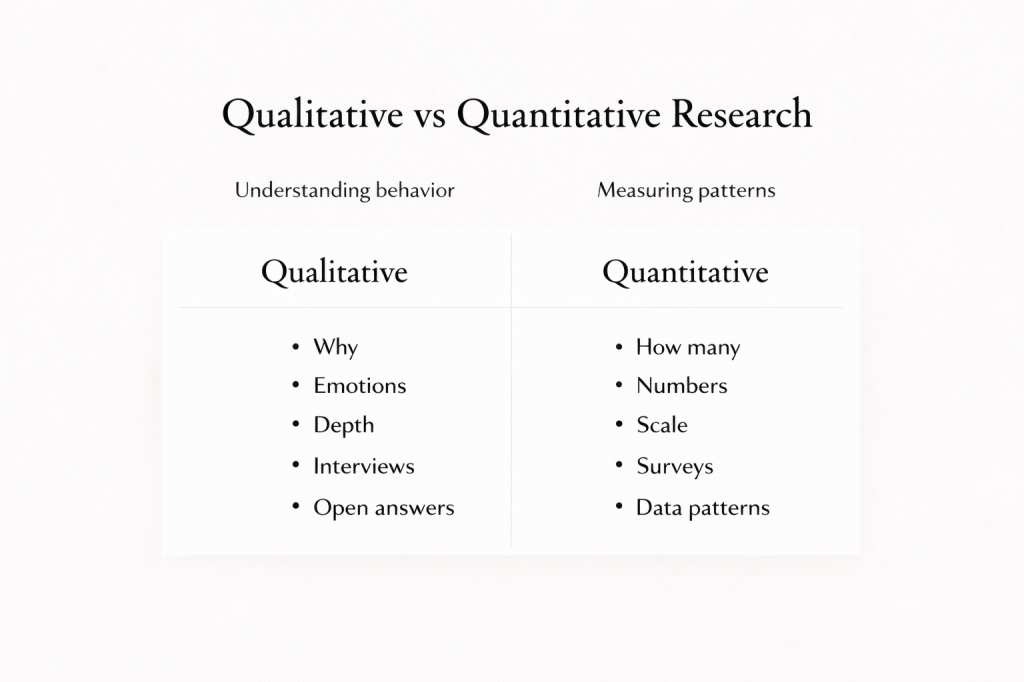
This is where the difference between qualitative and quantitative research becomes really important.
Qualitative research helps you understand why people feel a certain way. It’s more about depth, emotions, and experiences—which is especially relevant in the wellness space.
Quantitative research, on the other hand, helps you measure things at scale. It answers questions like how many, how often, or how much.
In practice, I think the most valuable approach is combining both. For example, before launching a new yoga offering, I could start by having conversations with my community to get deeper insights, and then follow that with a short survey to confirm patterns.
Beyond research: a mindset for better decisions
What I like about this concept is that it goes beyond research. You can apply it to almost anything—designing a class, building a website, or even creating content.
Having clarity on the end goal makes every decision more intentional.
Because at the end of the day, it’s not about doing more—it’s about doing what actually makes sense.
AI Disclosure:
This post was developed with the assistance of AI tools to support idea generation and structuring. All insights and final content reflect my own understanding and perspective.
 noefeelsmarketing.com